Showing posts with label double wall construction. Show all posts

Feb 19, 2019

Tibetan Temple #3

I rediscovered polymer clay after a 20 year hiatus. Back in the early 90s, I made beads and pins and jewelry items.

This time around, I had in mind the tiny lumberyard and all my little itty bitty constructions. For the Zendo, I formed a little platter, a bowl and a vase. In the midst of the experiments, I fell in love again with this versatile medium. There are a bunch of useless polymer items around my studio right now,  a giant red flower, some art deco pillars, on the way to making tiny creations for the Tibetan Temple:

Here is the tiny tile floor, made from a large sheet of polymer clay, conditioned and rolled out to accommodate my 7x7 inch plan. After baking, I cut out the corner tiles to make room for the 1x1 inch pillars.

The wood base for the temple is three sheets of basswood glued together and framed in around the tiles.

I was attracted to Buddhist teachings because of the three essentials: (a) ethical conduct, (b) mental discipline and (c) wisdom. Along the way, I learned about making malas (another post) and painting as a meditation.

While studying Thangka painting, mental discipline was necessary, as was patience with myself and for the slow emergence of anything resembling a Buddha.

This little tile floor will be painted blue, the base stained with red.

The miter box lessons from my son, Michael, come in handy with my tiny tools. I am pretty happy with my corners.

Tulku Jamyang and his wife, Chigme, invited me often to share their Tibetan dinners. It was all very mysterious to me, big bowls of chopped meat, tureens of thick soup, flat breads and sweet pastes and sticky rices. We ate heartily with fat spoons as well as our fingers and drank copious amounts of rich dark tea with coconut butter (no yaks for miles and miles).

When I work out my Tibetan Temple, I remember Tuklu Jamyang's teachings, and translate the sacred geometry into my constructions.

I have become more patient over the years through meditations of all kinds, other art forms, knitting, of course, but the memory of Mondays with Tulku Jamyang, his quiet teachings, his generous spirit, hover around me like a sprite.

As I teach myself to sculpt with polymer clay, I'll make a teacher, a student and a Buddha.


Jun 25, 2018

Jun 22, 2018

Printable Fabric


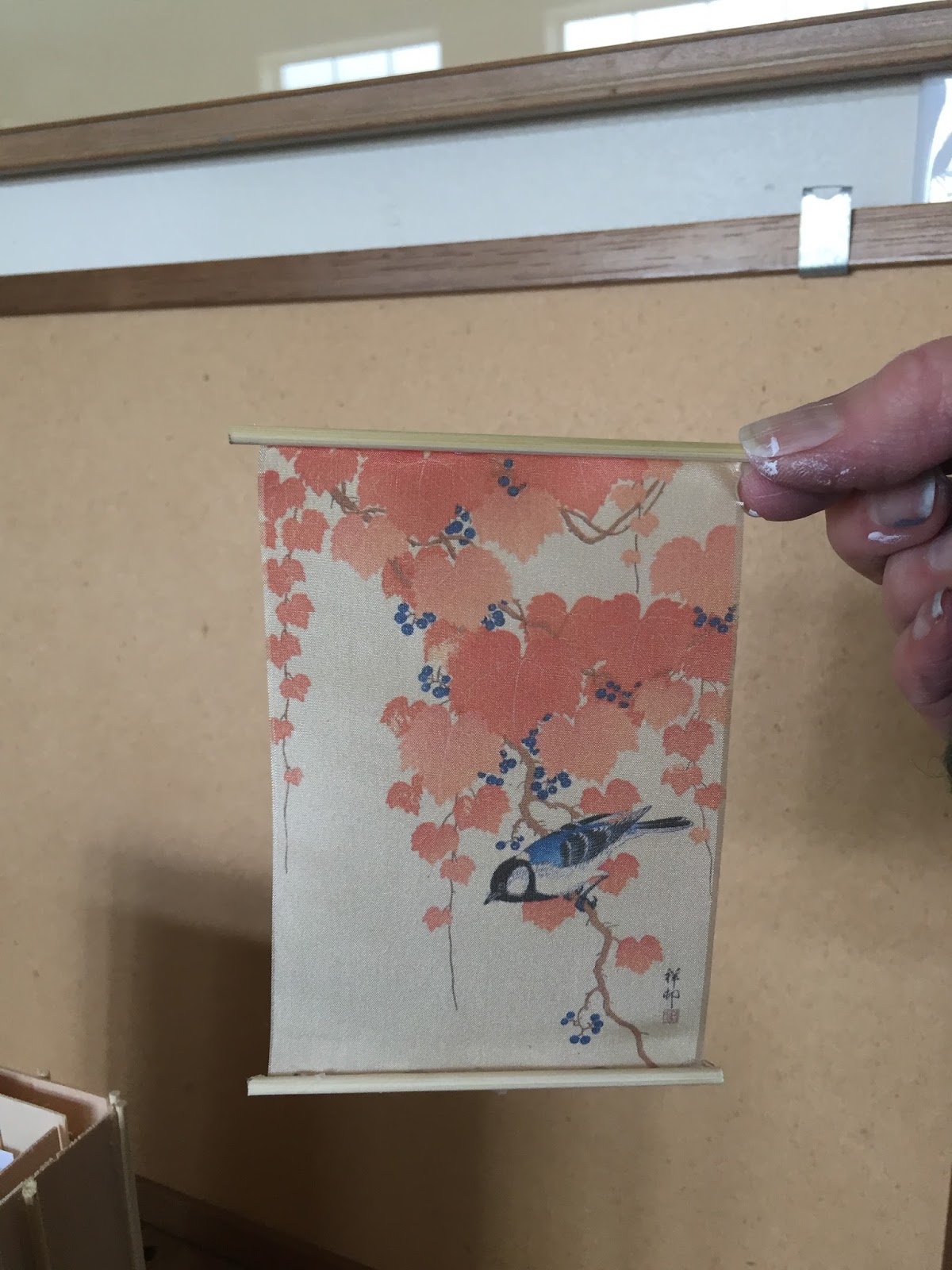
 Leftover from another project, I have packets of 8.5x11 sheets of printable fabric from Dharma Trading Co. in San Rafael, California: several grades of cotton, muslin and silk. These banners were printed on Haboti silk for tiny scrolls.


I am already imagining the tiny prayer flags fluttering on the Tibetan Buddhist Shrine.


Jun 12, 2018

First Shrine #5

 I originally planned to have sliding shoji screen doors, like in the Japanese Teahouse, but decided to fix the walls and to keep the visibility to the inside open - once the roof goes on, the inside will be much leas visible.

In building this structure, I keep in mind Tassajara Zen Center, where I first studied Zen meditation in 1972 and bought one of the first spiritual books of my collection, Zen Mind, Beginner's Mind, by the founder of the Zen Center, Shunryu Suzuki, which I am reading again now.

At Tassajara, the rooms and meditation hall are simple, clean and free is distractions.


Jun 8, 2018

The First Shrine #4

 In building the first practice piece, when I copied the YouTube Video about how to build a Japanese Teahouse by AkameruKawaii, the first thing I learned was: I did not want to build my shrines out of popcicle sticks and coffee stirrers.

After a disastrous attempt at staining popcicle sticks with red ink, which warped the tiny "boards" and made my next little practice structure look more like an outhouse than a place of contemplation and solace, I watched a wonderful video of a contractor building a 1/12 scale model of his home. His model covered a 4x8 foot piece of plywood, very impressive. I built a practice piece using double wall construction.

The first real piece in the series, the Zen Shrine, is underway. Here are the shoji walls under construction. Instead of popcicle sticks and coffee stirrers, I have developed a tiny lumberyard. Here I have tiny boards, trim and bamboo skewers (which I thought were OK, considering this is a Japanese Shrine).
 
Instead of a backroom for a teahouse, I built a tiny altar. Now, the wall are going up, which will be lined in "rice paper" painted in a bamboo motif (actually tracing paper on which I printed a black bamboo image).


Jun 4, 2018

The First Shrine #3


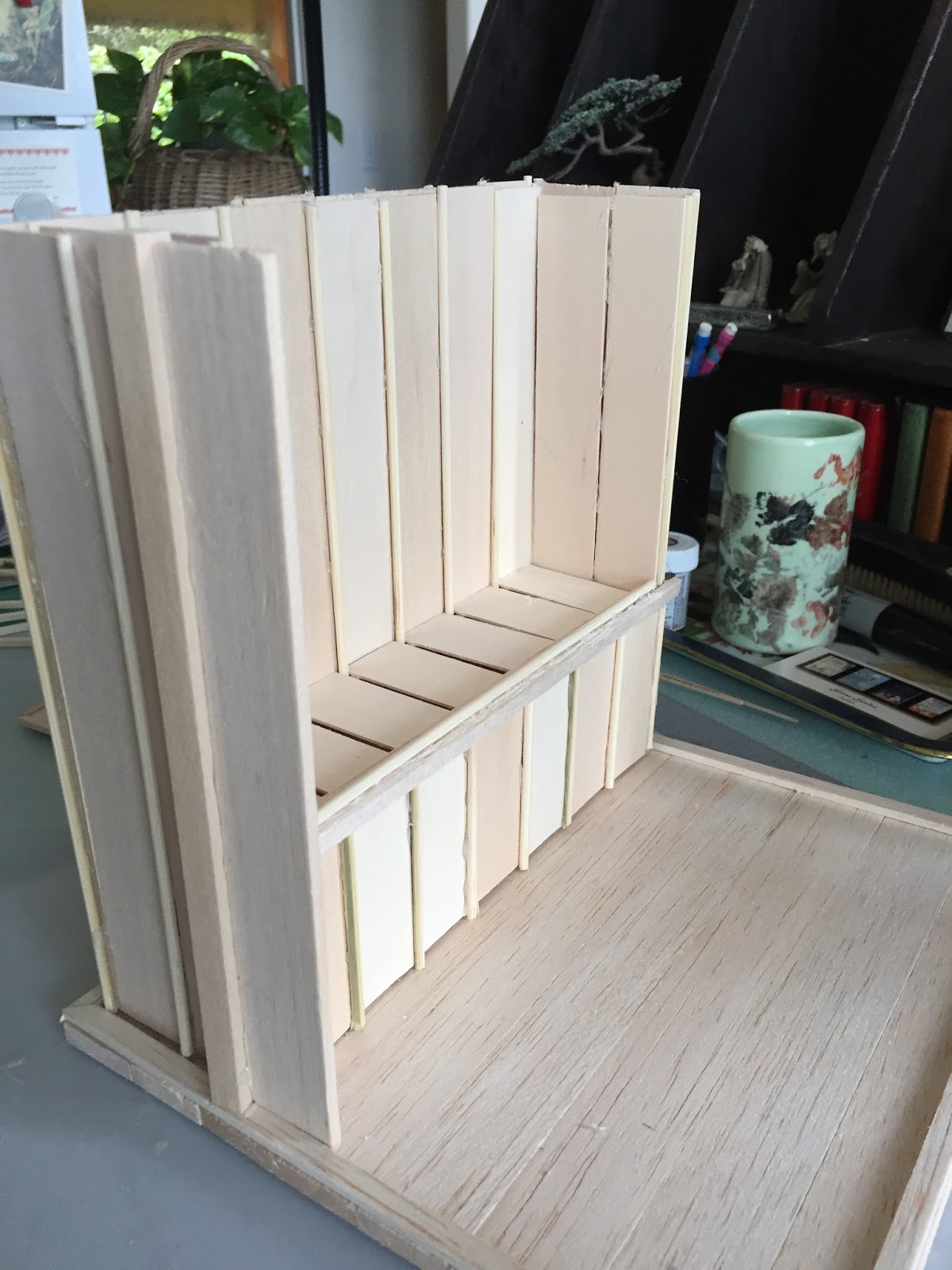
 In this first picture, I have just added the trim board that will hold up the altar shelf surface. I used craft sticks for the shelf and trimmed everything in skewers, which can be used as tiny dowels. It is a very simple design, very Zen, I think.

Meanwhile, I made a series of little terra cotta platters and bowls for both this shrine and the Shaman's Tipi. The platters will be painted in the style of each culture. Notice the tiny lantern on the right.

Next will be the six little shoji screen walls that create the room around the altar.

May 29, 2018

The First Shrine #2

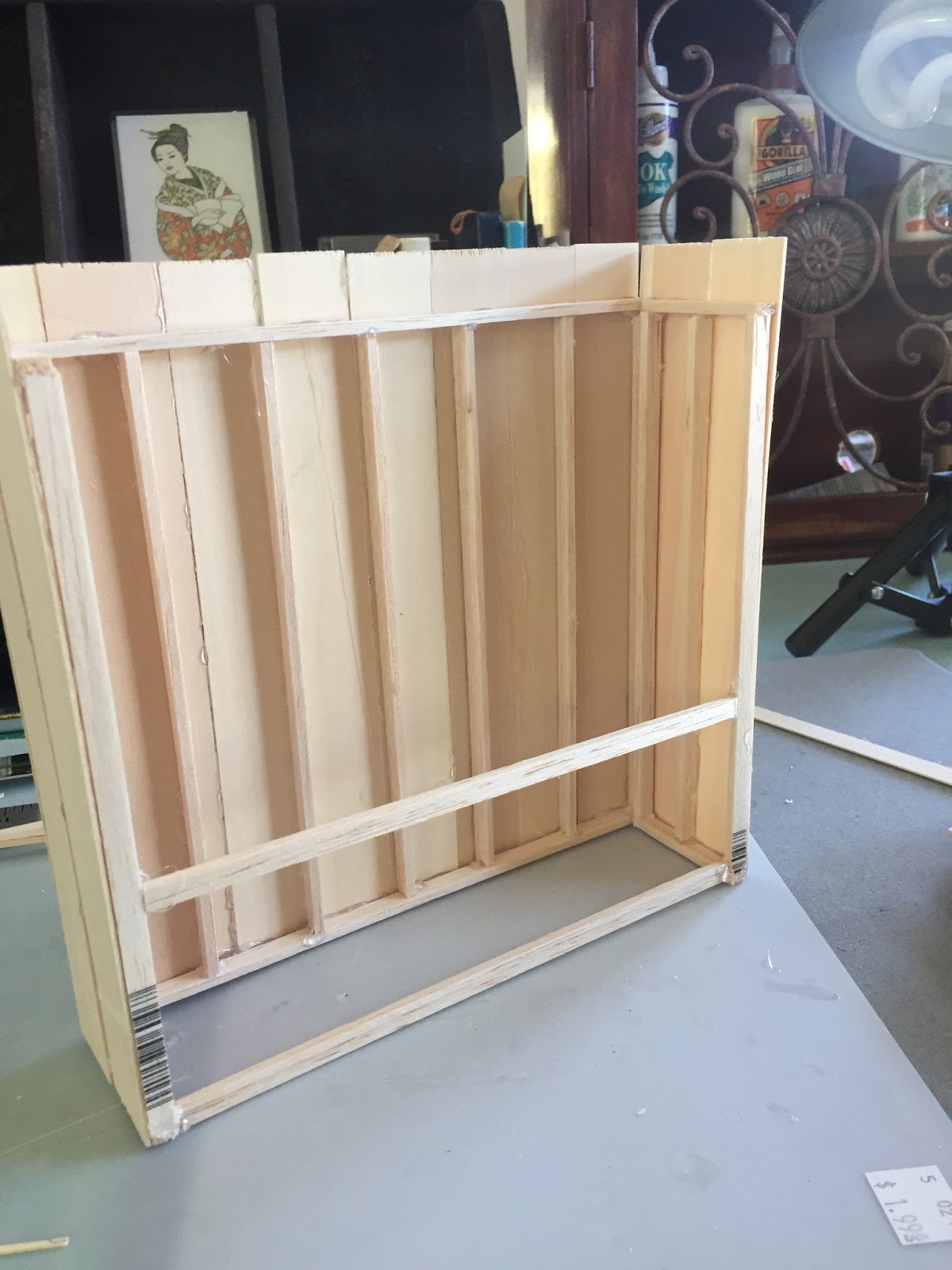
I am learning to think in layers of tiny lumber, like Basswood trimmed in skewers on the inside and outside of this shrine. The "studs" are Balsa wood, 1/16x1/4 inch.

When I first started the project, I slathered Elmer's glue on everything and waited for it to dry overnight before going on to the next step. Yawn.


I pondered why the videos and tutorials used Elmer's or wood glue and not hot glue which dries in a flash and reasoned that the hot glue was a bit uncontrollable for tiny gluing. But, this did not stop me.


I used my hot glue gun to put together this altar. What a difference. It went together in no time, is very sturdy, and allows me to keep going when I am on a tiny building roll and ready to finish the piece. It takes patience and finesse to keep from applying too much of a good thing but it is instant gratification.


May 25, 2018

The first shrine

When I started this tiny construction project, I thought I was building a tea house. That's all.

But, in my inimitable fashion, learning all about tiny construction while building tiny shrines has become a bit of a passion. My world of tiny construction opened up with a video of a contractor building a scale model of his home in 1/12 scale. The "Duh!" light bulb flashed above my head. Double wall construction.

After building a scale model box (see previous posts about Double Wall Construction) I was ready to begin my first piece. The first little tea house was built out of popcicle sticks and coffee stirrers. Also, I put it together with completely inadequate tools (Xacto knife, scissors) before the appearance of the tiny Xacto miter box and saw.

So, the project has evolved like this:

I found the fabrics in a stash, a year after my first thoughts about curtains in a miniature tea house (see previous posts about the Japanese Tea House). At that time, I was concentrating on the Faerie Project, which did not included a Japanese Faerie Tea House.

This time around, those fabrics jumped right into my hands and said, "Now!"

After exploring, and exactly following, the YouTube video about building a Japanese Tea House, I started to think about other tiny structures: shrines, temples, replicas of the tools and paraphernalia of the Divine. Which lead to the to the various divinities, temples, shrines and teaching which have influenced my life.

I chose three such influences to start the project. Why three, Ginna? Can't you just do one at a time?

Consider all that drying time.

The three choices: a Zen Shrine, a Shaman's Tipi and a Rose Window. You'll hear plenty about the Shaman's Tipi and the Rose Window later, but here first is a series of photos about building the altar for the Zen Shrine. I chose to do the Zen shrine first to continue to hone my skills in tiny double wall construction.  And, Zen Mind, Beginner's Mind, by Susuki Roshi of Tassajara Zen Center in Carmel Valley was one of the first spiritual books I ever read other than the Episcopal Book of Common Prayer. So, here is where I'll begin my series honoring higher consciousness and the divine.